
Boldly Going Nowhere: Star Trek's Nostalgia Addiction
And Why It's Anti-Star Trek

Every few months, the Star Trek franchise seems to do the same routine. They announce that some actor or actress has been cast to fill some “legacy” role in one of their many many Star Trek prequel series. A familiar name trends, the fandom does the sacred ritual of pointing at the screen and saying:
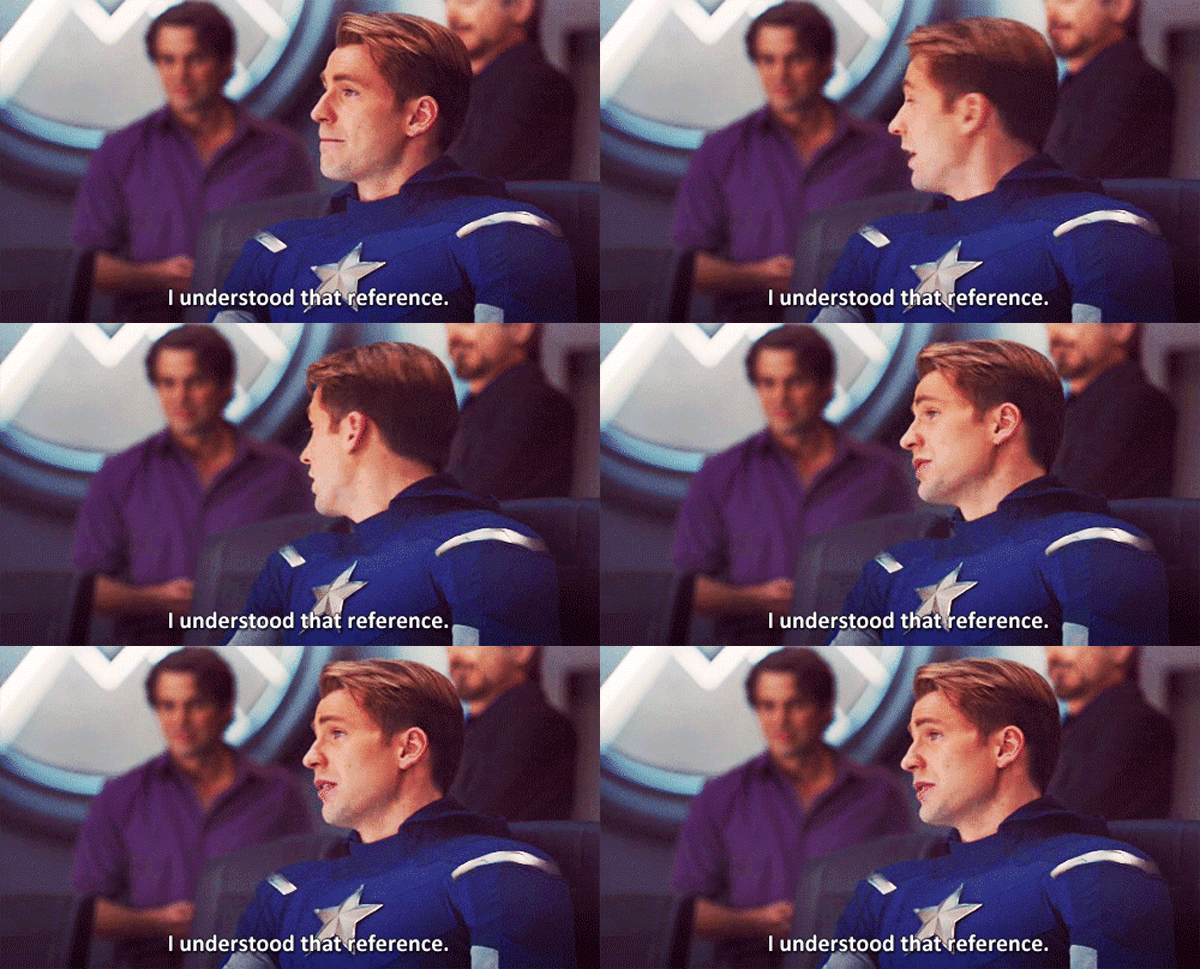
The problem is, I can never join in on this. Because I’m not thrilled by yet another actor reprising the role of James T. Kirk, Lt. Uhura, or Leonard “Bones” McCoy. I am not misty-eyed. I am not grateful. I am not standing up in my living room saluting the franchise like it just came home from the war.
I am tired. Specifically, I am tired of watching a franchise built on the idea of exploration turn itself into a theme park. The rides never change, but the gift shops get bigger every year.
Star Trek’s whole deal, from the beginning, was not to make a comforting show filled with nostalgia. It was never mean to harken back to the “good old days” or the “remember whens” or to make you excited by rehashing the character you liked when you were twelve. It was science fiction as an argument for the present.
I mean, the show’s tagline is “to boldly go where no man has gone before,” and that is a mission statement for the storytelling as much as it is for space travel. Star Trek is supposed to go forward. New questions. New conflicts. New ethical messes. New ways of seeing ourselves and our potential.
Nostalgia is the opposite of that.
The bridge crew were not just characters. They were a model of the 1960s arguing with itself.
If you strip away the decades of branding, the Original Series bridge is basically a weekly televised debate about modernity. Who gets authority. Whose knowledge counts. What progress costs. Whether institutions deserve trust. Whether human beings can grow up as a species, or whether we are just putting nicer wallpaper over the same old violence.
That is why the TOS characters worked. Not because they were iconic. Because they were useful.
They were stand-ins for specific sociopolitical tensions of the time. They were also stand-ins for the kinds of people who were tuning in to watch the show at home. Star Trek was building a future, yes, but it was also building a discussion. It was saying: you can disagree on how to think, how to feel, how to lead, and still be on the same bridge, making sure the ship doesn’t blow up and no one commits a war crime.
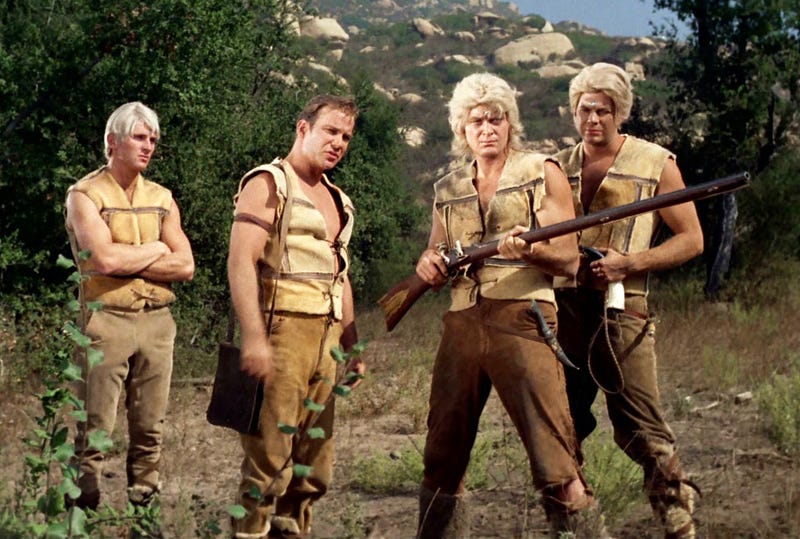
Kirk, Spock, Bones: the ideological triangle that powered the whole engine
These three are not just the main characters, they are a debate about the future of society as seen through the 1960s.
Bones: Humanity vs. Science
McCoy is the moral gut-check. He is folksy. He is blunt. He is suspicious of anything that sounds too good to be true or sounds like it was built by a committee. He represents the part of the audience that hears “progress” and immediately asks, “Okay, that’s nice and all, but who gets hurt?”
Dear Lord. You think we're intelligent enough to... suppose... what if this thing were used where life already exists?
-Dr. McCoy on the Genesis Device
Bones is there to drag the conversation back from shiny ideas into lived consequences. He is the voice of “science is good, but we can’t turn human beings into statistics.” In the 1960s, that mattered. This was an era where the public was watching the Space Race with wonder and watching the Cold War with dread. Expertise was respected, but it was also feared. Technology was thrilling, but it was also capable of ending the world.
Bone is the reminder that the future cannot be built solely by cleverness. It has to be built with a conscience.
Spock: Logic, Rationality, and The Outsider
Spock represented the Space Age dream that rationality can save us. He is a computing system in a uniform. He is the person who believes there is an answer if you think hard enough and stop panicking and getting so emotional.
But Spock is also anxiety about technocracy. The more you privilege logic, the more you risk devaluing emotion, and the more you risk treating people like problems to be solved, rather than lives to be nurtured and protected.
And of course, there’s another layer to Spock, the one that made him a lifeline for a generation of weird kids that didn’t quite fit in. He is the outsider. His mixed parentage means that he is constantly having to translate himself to be understood by the humans around him. Always having to prove his humanity in a room where everyone is benefiting from his competence, but questioning his cold-blooded rationality.
Spock tells the audience that the future will be built on rationality and expertise, but expertise must learn empathy if it wants to deserve power.
Kirk: the faith-in-the-mission guy
Kirk is idealism wrapped in command colors. He is patriotism. Faith in the mission. Faith in humanity. Faith that the organization and flag he wraps himself in, the Federation, can be a force for good.
He embodies a very 1960s belief: that power can be benevolent if the right people are holding the wheel. He is the hero who will make the ethical choice and still win the day. He reassures viewers who want to believe institutions can be moral and leadership can be responsible.
Kirk is not perfect. The series spends a lot of time testing whether his worldview holds up. That is the point. He is an argument about leadership when faith and idealism meet the pressure of life and death situations.
Why this matters
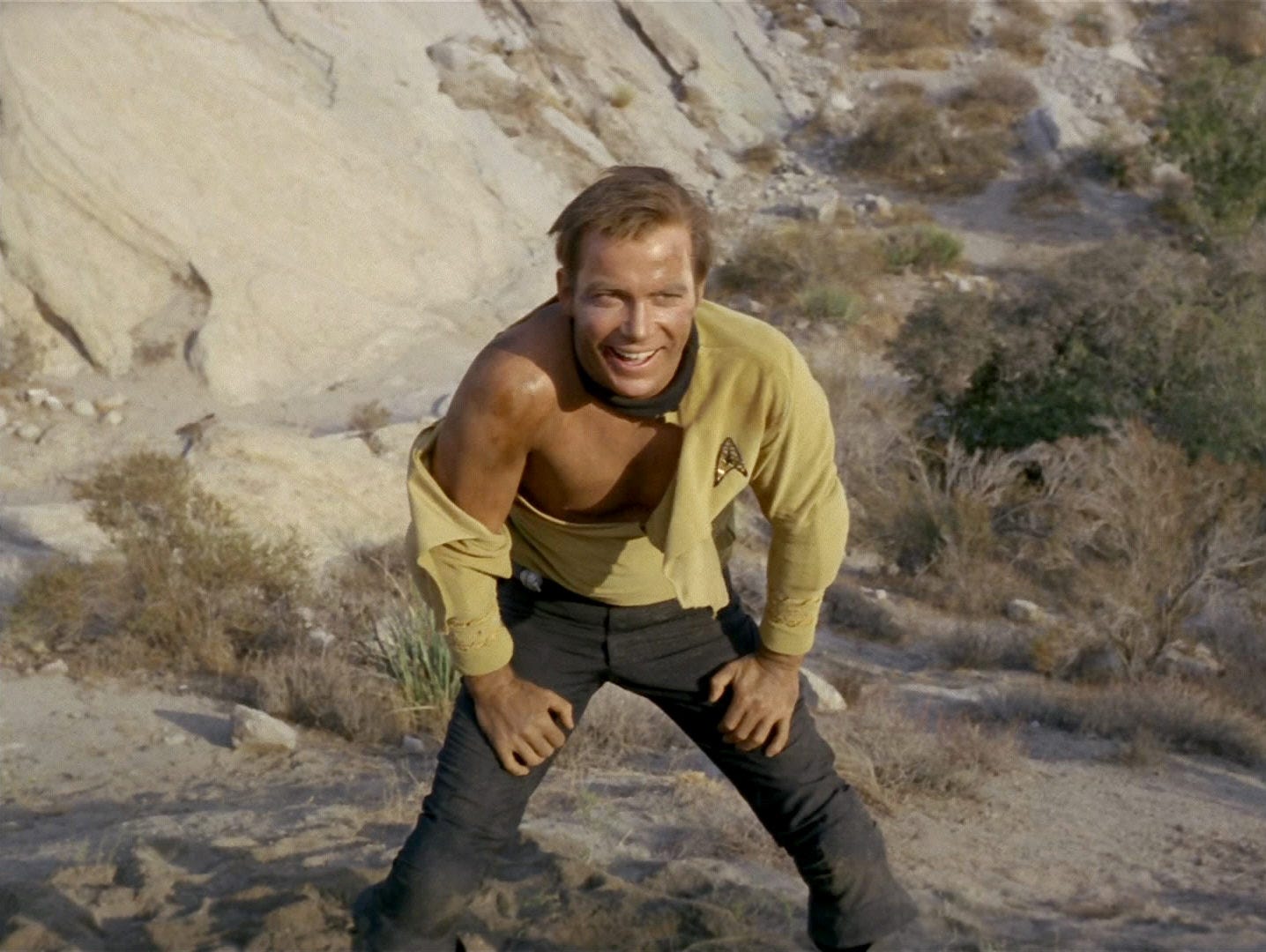
Together, these three are how Star Trek dramatized decision-making and the Cold War's conflicts. Spock pulls toward strategy and calculated logic. Bones pulls toward human cost. Kirk has to choose what power looks like in practice. That is the show. Not the bad lighting, funny costumes, and Kirk having his shirt torn off in every fight.
So when modern Trek drags these figures back as nostalgia objects, I want to ask a simple question: are you bringing back the character, or are you bringing back the function?
“Bones is here” means nothing if he is just there to grumble and deliver a meme. It is like putting a lab coat on a mannequin and calling it medicine.1
Nostalgia turns arguments into props (and then into memes)
Nostalgia doesn’t just flatten meaning. It sands it down until it’s smooth enough to sell.
These characters were built as ideological instruments. They were debate positions in a living, messy argument about modernity, power, ethics, and belonging. But in a nostalgia-driven franchise economy, nuance is inconvenient. It doesn’t trend. It doesn’t clip well (trust me, I’ve tried). It doesn’t fit on a t-shirt.
So what happens is this: the argument gets stripped out, and what’s left is a handful of easily recognizable traits. Not character, not function, just brand-safe vibes.
Kirk, who was originally a very specific type of moralized Cold War leadership, get reduced to the “the ladies’ man.” The guy who seduces his way through the galaxy, as if his most important relationship wasn’t his ship and the burden of command. As if his defining trait wasn’t the constant balancing act between ideals and the reality of power. Now he’s a meme in a gold shirt and the joke is always the same.
McCoy, who exists to call out the human cost of technological advancement, gets reduced to a catchphrase delivery system. “I’m a doctor, not a…” plus a folksy southern accent, like his entire purpose is to be grumpy about transporters and be vaguely xenophobic at Spock. The point of Bones wasn’t the accent. The point was the moral friction. He was there to make sure the future didn’t become a spreadsheet with an “acceptable losses” column.
And Spock… poor Spock. Spock is the one modern adaptation almost never gets right, because they keep mistaking “logic” for “weird” or “socially awkward.” They want an alien who does things oddly so other characters can react to it, like he’s a walking punchline for social awkwardness. But Spock isn’t a quirky little robot man, he’s not Sheldon Cooper, he’s not a teenager trying to figure out how to impress a girl.2 He’s a deeply controlled person living at the intersection of brilliance and outsiderhood, battling his human emotions because his Vulcan culture tells him he should. His restraint is not a gimmick; it’s a survival strategy, which he learns to let go of as he learns to accept his humanity through the acceptance of his friends.3
Spock: V'ger has knowledge that spans this universe. And yet, with all its pure logic, V'ger is barren. Cold. No mystery... no beauty... I should've known... [trails off]
Kirk: [leaning over him] Known? Known what? Spock, what should you have known?
Spock: [taking Kirk's hand] Jim, this simple feeling is beyond V'ger's comprehension.
This is what nostalgia does. It takes characters who were designed to argue with the present and turns them into a set of familiar poses. Then it loops those poses until the audience confuses recognition for meaning.
It’s not an homage. It’s taxidermy.
“But it’s for the fans”
I would like to submit a counter-argument: fans are not toddlers who only clap when you jingle the keys. Star Trek built its fandom by challenging people. It smuggled political debate into living rooms. It made people uncomfortable. It made people argue after dinner. That is why it mattered.
And here’s where the “for the fans” defense really falls apart, because it assumes something pretty insulting about what fandom is.
It assumes we are here for comfort. For validation. For the warm fuzzy feeling of being able to say, “I recognize that uniform,” like we just passed a pub quiz. It assumes the highest form of Star Trek engagement is spotting references and applauding politely, as if we are on a studio tour.
But Star Trek fandom didn’t form around comfort. It formed around argument.
Trek fans are famously opinionated for a reason. This franchise trained its audience to think of science fiction as a moral problem set. It gave people a shared language for debating war, racism, civil liberties, labor, religion, colonialism, surveillance, and the question that sits under basically every good Star Trek episode: what do we owe each other?
If you want “for the fans” to mean anything beyond marketing copy, then the show has to keep doing what created the fans in the first place. Which is not recycling the past. It is interrogating the present.
Here’s the real reason we keep getting nostalgia: it is safer than saying something sharp
This is not complicated. It’s just studio math.
Legacy characters are pre-sold. Familiar eras are pre-packaged. A cameo is easier to market than a new idea, because a new idea might challenge people. It might polarize. It might create discomfort. It might do the thing Star Trek is supposed to do and make you go:
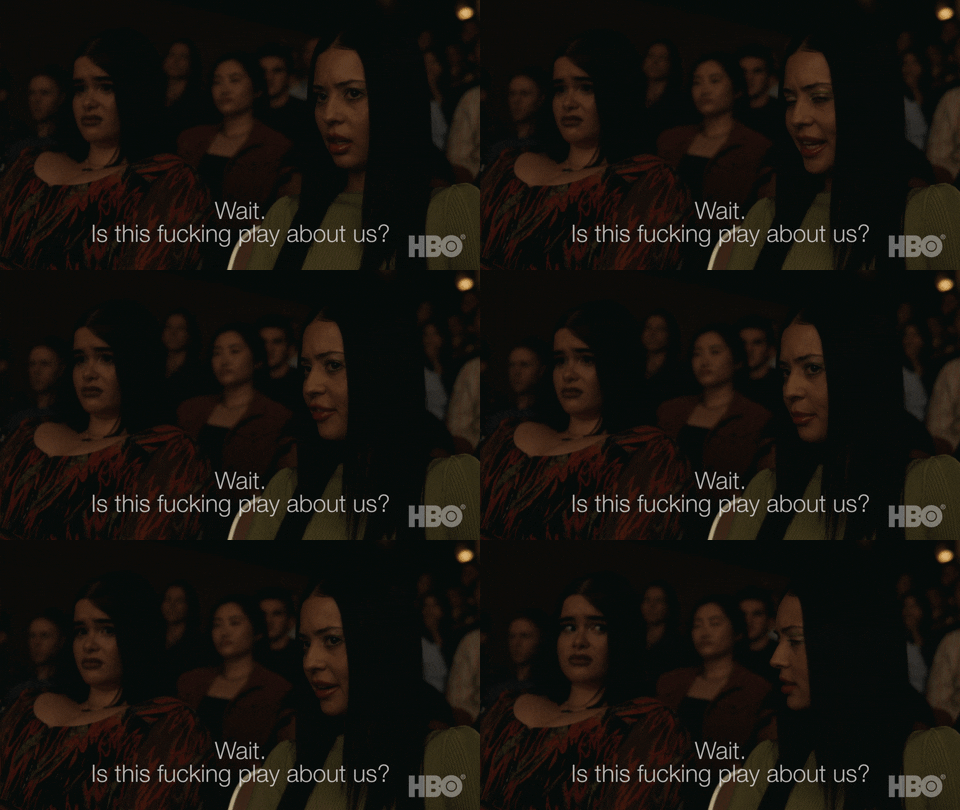
Nostalgia lets the studio sidestep all that risk. It replaces the tension of an argument with the ease of recognition. It turns Star Trek into a product you can consume like a sugary breakfast cereal.
Star Trek is supposed to be a mirror, not a shrine
And that’s the part that feels most anti–Star Trek, because Star Trek’s future was never meant to be passive. It was meant to be aspirational. It was meant to pressure the present. It was meant to make you feel, even for a moment, like the world you live in is not inevitably the future.
Which is why it’s so irritating that modern Trek keeps rummaging in the attic, because we are living in a golden age of “things that desperately need the Star Trek treatment.” Not the finger-wagging, Very Special Episode moralizing. The good stuff. The subtle, reflexive “oh no, that’s us” storytelling that lets you process a real problem from a safer angle, then makes you carry it back into your real life.
Pick a crisis. We have options.
We have climate collapse and disaster triage. We have surveillance that looks like convenience. We have algorithmic radicalization and the slow poisoning of shared reality. We have AI systems being sold as neutral while they replicate bias at scale. We have healthcare rationing, bodily autonomy fights, and the politics of who gets to be believed. We have refugees, borders, and the moral gymnastics of “humanitarian” empires. We have labor exploitation dressed up as flexibility. We have loneliness as a structural condition, not a personal failing. We have a whole economy built on squeezing the future dry and calling it innovation.
And Trek could do all of that. Not by giving us on the nose speech about how bad we are, but by doing what it has always done at its best: building a scenario where the ethical choice is complicated, where the institution you want to trust is also the problem, where the “good guys” have to confront what their comfort is costing someone else.
That is what “boldly going” looks like now. Not resurrecting a familiar face to reassure the audience that the vibes are intact, but using science fiction to make the present visible in a way that is harder to ignore.
What “boldly going” would actually look like right now
And the best part is, Trek doesn’t have to invent some brand new moral framework to do it. The franchise already has the tools. It just has to stop using them like museum pieces.
Take the Federation itself. The modern world is full of institutions that sincerely believe they are the good guys, while quietly doing harm through bureaucracy, incentive structures, and “for your safety” logic. That is basically Star Trek’s native habitat. The Federation is at its most interesting when it has to confront the gap between its ideals and its actions, when the Prime Directive stops being a slogan and starts being a mess, when “we are enlightened” runs into the inconvenient reality of power.
So imagine a Trek episode that treats surveillance the way Trek used to treat militarism. Not cartoon villains installing cameras, but a Federation system marketed as efficiency, safety, and seamless coordination. A starship that can anticipate needs, prevent accidents, reduce conflict. Great. Until you realize it also predicts dissent, flags “risk factors,” and quietly reshapes people’s choices. Nobody is twirling a mustache. Everyone has good intentions. That is the horror of it. That is also the point.
Or take climate collapse, which is not just “the environment is sad.” It is triage. It is logistics. It is politics. It is who gets resources first, who gets relocated, who gets labeled “unavoidable loss,” and who gets to make those decisions while insisting it is all neutral. Trek could do that in one episode without a single speech. Put a crew in a situation where they can save one region or one species or one generation, and make the “good” choice hurt. Make it leave scars. Then end the episode without a neat moral bow, because the bow is what lets the audience off the hook.
Same with AI. Trek loves the personhood question, but the modern problem is bigger than “is the android a person.” It’s also: who owns the system. Who profits from it. Who gets replaced. Who gets disciplined by it. Who is told, politely, that an algorithm has decided their future and there is no appeal. Trek can do that with the same elegance it used for Cold War paranoia. Not by screaming “AI BAD,” but by showing a society slowly outsourcing responsibility, then acting surprised when nobody can be held accountable.
And then there is disinformation and reality collapse, which is one of the most Trek-ready crises imaginable. What happens when a civilization can no longer agree on basic truth. When “facts” are tribal markers. When the tools meant to connect people are optimized to enrage them. Trek is built for this because it’s always been about diplomacy, translation, and miscommunication. Give us a first contact scenario where the barrier is not language, it’s epistemology. Two groups living in the same space, seeing entirely different realities, each with data to prove it. Make the crew realize that you can’t negotiate peace if there is no shared ground to stand on.
Even bodily autonomy, which modern politics keeps turning into a battleground, could be handled with Trek’s best kind of restraint. Not a lecture. A medical ethical dilemma. A “this is policy” collision with a patient’s personhood. A system that claims post-scarcity enlightenment, but still treats certain bodies as public property in moments of crisis. Trek has always understood that the future is not just technology. It’s who gets to control it, and who gets controlled by it.
That is the difference between Star Trek as science fiction and Star Trek as a nostalgia product. Science fiction pressures the present. Nostalgia protects the brand.
And this is why I’m so allergic to the “for the fans” framing. Because the most fan-service thing Star Trek could possibly do is treat its audience like grown adults who can handle complexity. Who actually want to be challenged. Who do not need the keys jingled in front of our faces to feel something.
The show that gave us a future worth wanting should not be spending so much time trying to recreate the past we already survived.
If Star Trek is going to “boldly go” again, it does not need another legacy face. It needs a new set of stories that look at our world and ask the uncomfortable question Trek used to ask constantly: what are we becoming, and are we sure we want that?
A franchise that cannot stop looking backward has stopped believing in its future.
Star Trek was not designed to be a museum. It was designed to be a living critique and an aspirational blueprint. It was designed to make people ask uncomfortable questions and then imagine better answers.
So no, I’m not thrilled when the franchise keeps pulling the same old icons off the shelf like comfort objects. Because the second Trek becomes a shrine to itself, it stops being what made it worth loving in the first place.
Exploration is hard. Nostalgia is easy.
Star Trek used to choose hard.
Which will likely be the next step for U.S. health insurance companies.
The way they handled him and T’Pring in Strange New Worlds nearly gave me an aneurysm, if you can’t tell.
Which is why I nearly lost it when Ethan Peck said he’d decided to play Spock as younger and more emotional, as if the entire point of his character arc throughout the Original Series and films wasn’t that he was struggling to accept and allow himself to feel.